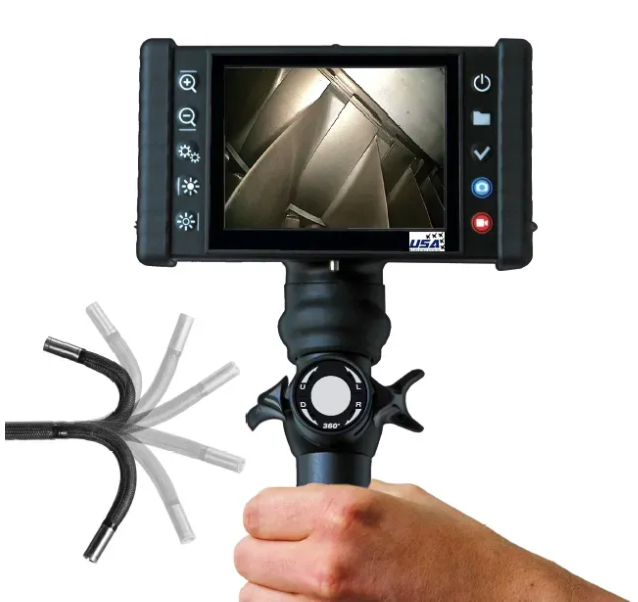
Helicopter maintenance is a different world from fixed-wing work. Space is limited, access panels are often small, and critical components are packed into compact bays where a direct line of sight is rare. Even routine inspections can become time-consuming when technicians have to remove surrounding parts just to confirm the condition of a single area. This is one of the reasons videoscopes have become a go-to tool in rotary aviation maintenance. They provide clear visuals in tight spaces, help reduce unnecessary disassembly, and improve documentation for both scheduled inspections and troubleshooting. Companies like USA Borescopes support these workflows by offering inspection equipment designed to deliver reliable imaging and flexible access in challenging maintenance environments.
Why Helicopter Inspections Are Uniquely Challenging
Helicopters are engineered for compact efficiency. That is great for performance and weight, but it creates maintenance constraints that technicians deal with every day.
Dense component layouts
Rotorcraft designs pack engines, gearboxes, transmissions, hydraulic lines, wiring harnesses, and structural members into tight areas. Access is often blocked by adjacent systems, and moving one component to inspect another can trigger additional work, inspections, and reassembly steps.
Limited access points and inspection angles
Many inspection tasks require viewing surfaces that are not aligned with access ports. Components may sit behind brackets or under structural ribs. Even when an access door is available, the view may show only part of the target area unless the inspector can precisely angle the camera tip.
Greater sensitivity to downtime
Helicopters are commonly used for missions where availability matters, including EMS, utility work, offshore operations, security, and search and rescue. Shortening maintenance time while maintaining high inspection standards directly supports operational readiness.
Vibration and wear patterns that demand vigilance
Rotorcraft systems experience vibration and dynamic loads that can accelerate wear in certain areas. Gearboxes, couplings, and bearings are often high-focus components. Any tool that helps detect early wear without invasive teardown can support safer maintenance planning.
What Makes Videoscopes Ideal for Helicopter Maintenance
A videoscope is essentially a flexible camera system designed to reach areas that are hard to see. In helicopter maintenance, that capability aligns with the realities of tight access and awkward angles.
Flexibility and navigation through complex routes
Unlike rigid systems that require straight access, videoscopes can route around obstacles and follow internal passages. This is valuable when inspecting behind housings, around corners, or deep inside compartments where straight insertion is not possible.
Articulation that improves inspection coverage
Articulation is one of the biggest advantages in rotorcraft work. Being able to steer the camera tip means technicians can inspect blade edges, gear teeth, seal areas, and housings from multiple angles. This is often the difference between a quick confirmation and an incomplete view that forces additional disassembly.
High-resolution imaging for defect recognition
Helicopter components often show subtle signs of wear early. Fine scoring, early pitting, heat discoloration, small cracks, or seal leakage marks can be difficult to interpret without clear visuals. A high-quality videoscope supports accurate calls and helps reduce both missed findings and false alarms.
Efficient documentation for maintenance records
Modern maintenance programs increasingly rely on visual documentation. Still images and short videos can be attached to work orders, reviewed by engineering, and used as a baseline for comparison. Videoscopes make this faster because the live image can be captured immediately once the view is stabilized.
Common Helicopter Inspection Applications
Videoscopes are used across many helicopter systems, but a few areas consistently deliver the biggest benefits because they combine high criticality with tight access.
Engine Compartments and Hot Section Areas
Engines in helicopters often sit in compact bays with limited clearance. Videoscopes support inspections through ports and openings without removing major components.
What technicians commonly check
- Signs of foreign object damage on compressor sections
- Discoloration or heat distress indications
- Combustor liner condition when applicable
- Turbine blade edges for cracking, oxidation, or erosion
- Evidence of abnormal deposits or blockage
Tight access makes it harder to align a camera for the best view. A videoscope with responsive articulation and stable lighting helps inspectors angle the camera precisely and reduce glare, especially on reflective metal surfaces.
Gearboxes and Transmission Areas
Gearboxes are a major focus in helicopter maintenance. They handle high loads and are often linked to vibration and wear patterns that require close monitoring. Visual inspection can support early detection of issues before they develop into major events.
What to look for inside gearbox areas
- Gear tooth wear patterns, including pitting and spalling
- Scoring marks that may suggest lubrication issues
- Discoloration that can indicate heat stress
- Metal debris accumulation in corners or near magnetic plugs
- Seal areas showing oil tracking or leakage evidence
Videoscopes help technicians inspect internal surfaces without pulling housings apart. Even if a full teardown is needed later, an initial visual inspection can support planning and ensure the right parts and resources are available.
Structural Cavities and Hidden Areas
Rotorcraft maintenance often involves inspecting structural regions that collect moisture, debris, or corrosion. These areas can be difficult to view directly, especially inside tail booms, frames, and internal compartments.
Visual inspection helps technicians identify:
- Early corrosion, including pitting and surface roughness
- Cracks near stress points or rivet lines
- Fluid residue trails that suggest leakage
- Debris accumulation that may affect drainage or airflow
For these inspections, lighting control matters. Too much illumination can wash out details on reflective surfaces. Too little can hide texture and surface changes. A good videoscope lets the inspector adjust the lighting to match the surface.
Solving Tight-Access Problems Without Unnecessary Disassembly
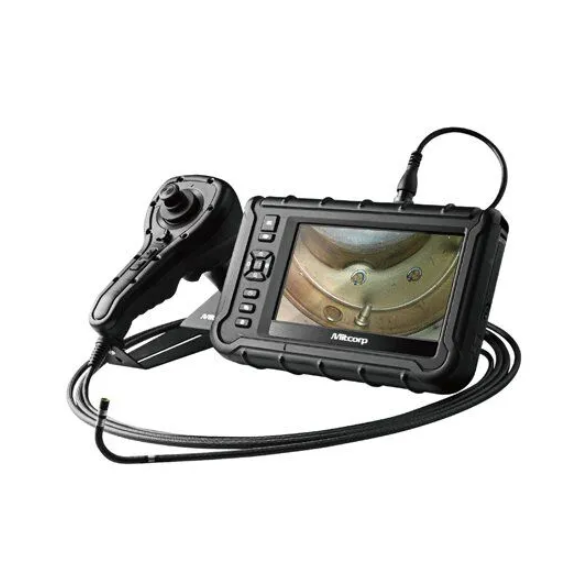
One of the biggest operational advantages of a videoscope is reducing teardown for access. In helicopter maintenance, disassembly is not only time-consuming. It can also create follow-on work that was not part of the original task.
Faster confirmation during troubleshooting
If a vibration trend points to a possible wear issue, a videoscope can often provide an initial confirmation quickly. That helps teams decide whether to continue monitoring, schedule a planned inspection, or move straight to corrective action.
Reducing rework and secondary steps
Removing and reinstalling components adds risk and time. Each extra step creates potential for fastener damage, incorrect torque, or inadvertent system disturbance. Videoscopes reduce these steps by giving visual access without major removal.
Supporting condition-based maintenance decisions
When visual findings are documented consistently, teams can track wear progression. This supports decisions based on condition rather than assumptions. Over time, this can reduce unnecessary part replacements while still supporting safe operation.
Best Practices for Using Videoscopes in Helicopter Maintenance
A videoscope is most effective when paired with disciplined technique. Helicopter systems can be delicate, and tight access means the probe is more likely to contact surfaces.
Plan the route before insertion
Confirm access points, identify obstacles, and decide which angles are needed. This reduces unnecessary probe movement and helps protect the insertion tube and camera head.
Stabilize before capturing images
Motion blur is a common problem in tight spaces. Once the camera is positioned, pause and stabilize the view before capturing still images. If possible, capture both a context image and a close-up detail image.
Use a consistent scan approach
Even in tight compartments, having a standard scan routine reduces missed areas. Teams often use checklists and standard views to ensure repeatability.
Document orientation clearly
Images are most useful when they include enough context to locate the defect later. Notes should include the access point used, the system or component location, and the viewing angle if relevant.
Maintenance teams that are upgrading their inspection capability often compare probe sizes, articulation, imaging quality, and durability.
What to Look For When Selecting a Videoscope for Rotorcraft Work
Helicopter maintenance demands specific capabilities. The best choice depends on typical inspection tasks, but most teams prioritize:
Small diameter probes
Smaller probes can reach more areas, especially in engine bays and gearbox access points. The tradeoff is that handling and durability vary by system, so choosing a balance that fits daily work matters.
Smooth articulation and responsive controls
Articulation enables more complete inspections in tight spaces. Controls should feel predictable and stable, especially when the inspector needs to hold a view while capturing documentation.
Strong lighting with adjustable control
Rotorcraft inspections involve reflective metal surfaces, dark cavities, and awkward angles. Adjustable lighting helps avoid glare and reveal surface texture.
Durable construction
A probe used frequently in tight spaces will experience wear. Durability supports consistent performance and reduces tool downtime.
A Practical Tool for Tight-Access Maintenance
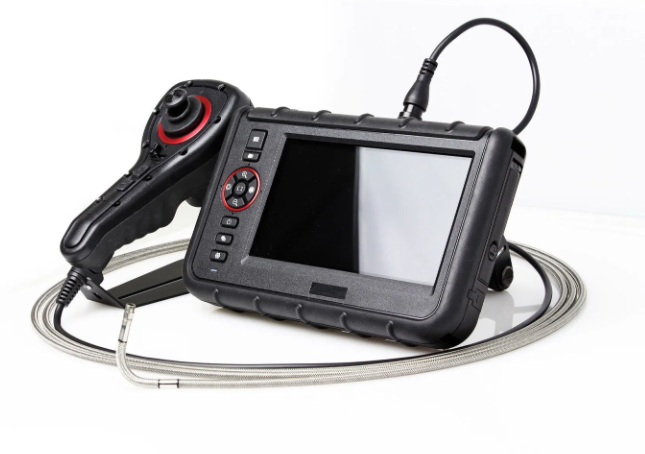
Helicopter maintenance is defined by compact design and limited access. Videoscopes solve many of the day-to-day inspection challenges that come with that reality. They reduce disassembly, speed up troubleshooting, improve documentation, and support condition-based maintenance decisions through consistent visual evidence.
Tight-access helicopter inspections demand tools that can withstand confined-space conditions and frequent use without compromising image quality. USA Borescopes offers videoscopes and inspection accessories engineered for these conditions, helping maintenance teams configure equipment around specific inspection tasks. To discuss the right configuration for specific helicopter inspection tasks, readers can contact USA Borescopes.
About the Author
The author is an aviation maintenance and inspection specialist with extensive experience using remote visual inspection tools in rotary and fixed-wing environments. They focus on practical inspection techniques, defect recognition, and documentation workflows that improve consistency and reduce downtime. Their guidance is shaped by real maintenance realities where access is limited, and accuracy is essential.
