Ask your mother what she remembers about her wedding dupatta, and she might mention the aunt who stitched its border before she tells you what colour it is. That border is a good place to begin choosing your own bridal outfit. A net lehenga choli with dupatta gives you the option of wearing a sheer layer alongside the family piece. Start with the detail she remembers best, then decide whether you want it near your face or spread across one shoulder.
Find Her Favourite Detail
Unfold the dupatta together on a clean sheet. Find the edge she wore closest to her face and the end that shows in her wedding photographs. Sometimes a row of tiny flowers runs along just one side, or the two ends have quite different embroidery. Folding the fabric into narrow shoulder pleats could hide the very detail you love. If the cloth feels delicate or you see broken threads along an old fold, consider a portrait with it laid out beside you.
Build Colour Around the Border
Before shopping, take a clear daylight photograph of the border against plain white paper. It gives you a better starting point than trying to remember the difference between coral and vermilion under showroom lights. Pick out one thread colour or consider a skirt that gives the whole border a contrasting background. An old gold motif on wine can look particularly lovely against blush. Here are five combinations to try, with the inherited colour first and the proposed skirt shade second.
- Rose with ivory
- Vermilion with peach
- Wine with blush
- Saffron with cream
- Fuchsia with plum
Give Bright Embroidery Some Space
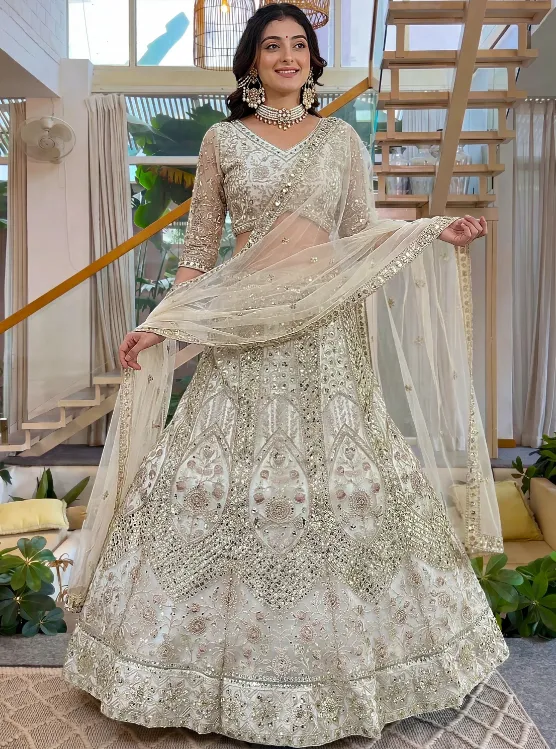
An ivory outfit is worth trying if the family embroidery contains several colours you would like to keep visible. One off-white bridal set has a soft net skirt, a matching blouse and a sheer dupatta, all embroidered with sequins. Picture your mother’s rose silk dupatta across that pale blouse, its border on full display. You could wear her dupatta for the ceremony and bring out the matching net for dinner. Each piece then gets a moment when you can see the embroidery clearly.
Layer Two Different Textures
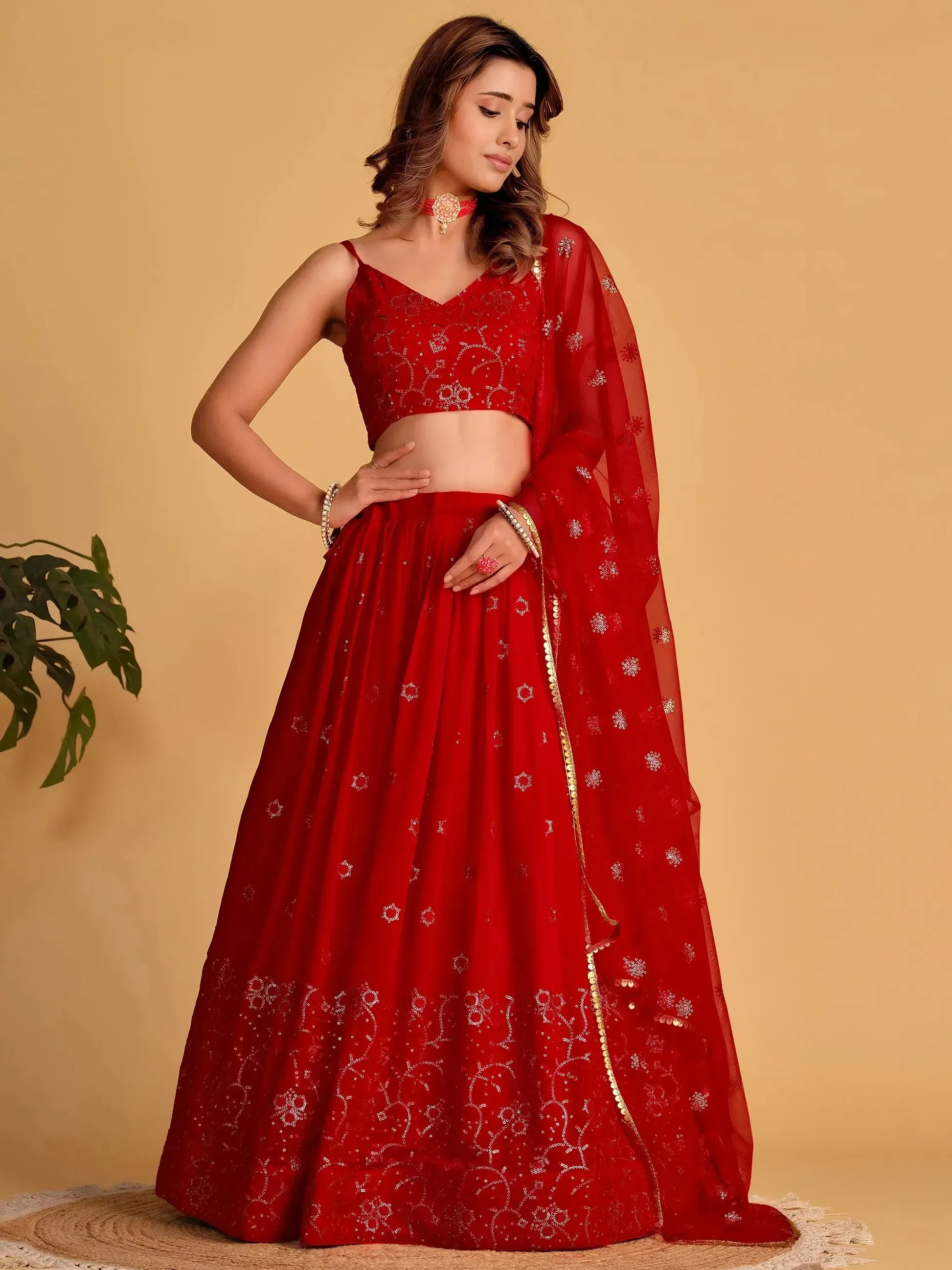
With a Red Lehenga Choli, you can keep the depth of colour your mother wore and still make the outfit feel like yours. One red and pink silk bridal design comes with both a woven Banarasi silk dupatta and an embroidered net one. Borrow that pairing if the family piece is a rich weave. Lay it over one shoulder and try the sheer piece over your hair. A narrow line of red blouse between the borders helps each pattern stay visible.
Feel Where the Weight Falls
Before deciding that a dupatta belongs over your head, find out where its weight sits. A wide metallic border can pull a veil backwards as you turn, even when the middle feels almost weightless. Place it loosely over your shoulder and see whether the decorated end hangs the right way up. If your mother wore hers as a veil, ask her to demonstrate how she folded it. That small adjustment may explain why her border sat so neatly in the photographs.
Leave Room on the Blouse
At the blouse fitting, bring the dupatta or a piece of cloth folded to the same width. A beautifully embroidered shoulder can disappear beneath a broad woven border, especially when both follow the same diagonal. If your blouse is being stitched, ask the tailor to show you where the neckline and sleeve motifs will sit once you are dressed. An embroidered cuff can be a better place for a flourish when the dupatta already covers the shoulder you intended to decorate.
Choose When to Wear It
You may want to wear the family dupatta for just ten minutes of the wedding day. That might be the walk into the ceremony, a quiet portrait with your mother, or the first family gathering afterwards. Decide who will take it when you change and where its wrapping will be. Handing it back to the person who brought it is easier than trying to describe a particular red bundle to a cousin while everyone else is already heading towards the reception doors.
Conclusion
Before the wedding album goes to print, sit down with your mother and choose one photograph from her ceremony and one from yours. Look for the small detail you can recognise in both, whether it is a spray of green leaves or the same narrow strip of faded pink. Ask her to write the caption in her own words. Years from now, the person who unfolds that dupatta will know who wore it and why that little border mattered to you both.
