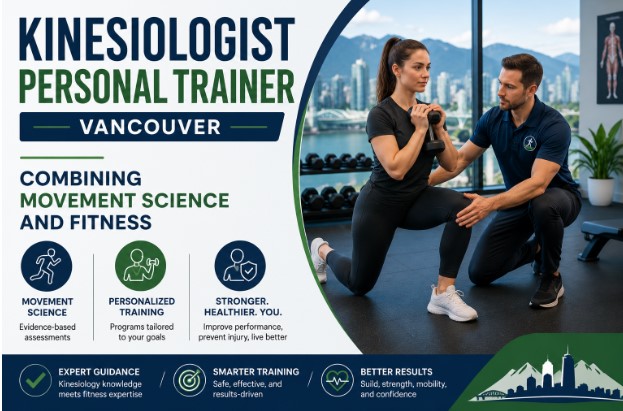
Finding the right fitness professional can make a significant difference when your goals involve more than general exercise. A kinesiologist personal trainer in Vancouver can combine knowledge of human movement with individualized exercise programming to help clients improve strength, mobility, physical function, and overall fitness.
This approach can be particularly useful for people who want a structured fitness program while also paying close attention to movement quality, previous injuries, or functional limitations.
What Is a Kinesiologist Personal Trainer?
Kinesiology focuses on the science of human movement, including biomechanics, exercise, physical activity, and functional performance. Personal training, meanwhile, focuses on developing individualized exercise programs and providing coaching and accountability.
A professional with training in kinesiology may use movement assessments and exercise science principles when designing fitness programs.
Depending on their qualifications and scope of practice, sessions may focus on:
- Strength development
- Mobility
- Functional fitness
- Balance and coordination
- Core stability
- Cardiovascular conditioning
- Injury prevention
- Athletic performance
The exact services offered depend on the practitioner’s credentials and professional scope.
Who Can Benefit From This Approach?
Movement-focused personal training can be suitable for a wide range of people, including:
- Beginners starting an exercise program
- Adults returning to exercise after inactivity
- People transitioning from rehabilitation
- Active adults wanting to improve mobility
- Athletes seeking performance improvements
- Older adults working on strength and balance
- Individuals with movement limitations
A personalized assessment can help determine which exercises are appropriate.
Benefits of Working With a Movement-Focused Trainer
Personalized Exercise Programming
Rather than following a generic workout plan, your program can be adjusted according to your current strength, mobility, experience, and goals.
Improved Movement Quality
A movement-focused approach emphasizes proper technique and efficient movement patterns rather than simply completing as many repetitions as possible.
Strength and Functional Fitness
Progressive resistance training can help improve muscular strength and the ability to perform everyday activities.
Mobility and Stability
Mobility and stability exercises can complement strength training and help create a more balanced fitness program.
Support During a Return to Exercise
Individuals completing rehabilitation may benefit from a gradual transition into regular fitness training, provided they have appropriate clearance and guidance.
What Happens During an Initial Assessment?
An initial session may involve an assessment of your current physical abilities and a discussion of your goals.
Depending on the practitioner, this can include:
- Health and exercise history
- Movement screening
- Strength assessment
- Mobility testing
- Balance evaluation
- Postural assessment
- Goal setting
The results can then be used to develop an individualized training program.
How Kinesiology and Personal Training Can Work Together
A movement-focused training program can combine several areas of exercise.
Strength Training
Resistance exercises help develop muscular strength and support functional movement.
Mobility Training
Mobility exercises can improve joint movement and complement strength development.
Functional Training
Exercises can be selected to reflect movements used in everyday activities, work, recreation, or sports.
Conditioning
Cardiovascular and conditioning exercises can improve endurance and overall fitness.
Progressive Training
Exercise difficulty can gradually increase as strength, mobility, and confidence improve.
Supporting Injury Recovery
People recovering from injuries should distinguish between clinical rehabilitation and general fitness training.
A personal trainer can help with exercise progression after appropriate clearance, while diagnosis and treatment of an active injury should remain within the scope of the relevant healthcare professional.
When appropriate, communication between rehabilitation and fitness professionals can help create a smoother transition from clinical care to independent training.
Tips for Choosing a Kinesiologist Personal Trainer in Vancouver
Before beginning a program, consider:
- Professional education and certifications
- Experience with your goals
- Experience working with previous injuries
- Assessment and program-design methods
- Communication style
- Availability and scheduling
- Whether collaboration with healthcare professionals is offered when appropriate
Ask questions about the trainer’s qualifications and scope of practice before starting.
Frequently Asked Questions
What is a kinesiologist personal trainer?
It generally refers to a personal trainer with kinesiology education or expertise in human movement who incorporates exercise science and movement principles into individualized training.
Can a kinesiologist personal trainer help with an old injury?
They may help individuals improve strength and movement after an injury, depending on their qualifications and the person’s current condition. Active or unresolved injuries should be assessed by an appropriate healthcare professional.
Is kinesiology-based personal training suitable for beginners?
Yes. Exercise programs can be adjusted to a beginner’s fitness level, movement abilities, and goals.
Can this type of training improve athletic performance?
It can. Strength, mobility, coordination, conditioning, and sport-specific movement can all be incorporated into a progressive performance program.
Conclusion
A kinesiologist personal trainer in Vancouver can provide a movement-focused approach to individualized fitness by combining exercise programming with principles of human movement. This can be valuable for people seeking better strength, mobility, physical function, or athletic performance.
Whether you’re beginning a fitness program, transitioning from rehabilitation, or looking to improve performance, selecting a qualified professional and following a gradual, personalized training plan can help support sustainable progress.
